Aea Varfis-van Warmelo on Her Book "Attention Seeking Behaviour" and Writing It Like a Liar
While reading a book of fiction, I often don’t get immersed in its world until at least one-third of the way in. It takes me that many pages to absorb the characters, get invested in their journey and fully land myself in the world that the writer has created. This was not the case while reading Aea Varfis-van Warmelo’s Attention Seeking Behaviour. I landed into its world by the time I reached the twelfth page and paused to write in my reMarkable, ‘This book is outstanding’. Perhaps that was not only because the book is written admirably, but also because of its genre-bending form – while it’s characterised as fiction, it’s not entirely one.
Attention Seeking Behaviour, published earlier this year by Peninsula Press, is Varfis-van Warmelo’s first book, after her debut poetry pamphlet, Intellectual Property (2024). The book is a wavering flow between the narrator’s consciousness, unconsciousness, her physical reality, and her lies, and the reader might never know which is which. However, the mostly unnamed narrator holds the reader’s attention and trust through the book’s entirety.
To unpack these aspects and more, I was thrilled to speak with Varfis-van Warmelo about Attention Seeking Behaviour and her writing practice.
Dimple Bangalore: The book is a mysterious blend of memoir, fiction, and essay – how did its form evolve? How does it fit into your writing practice?
Aea Varfis-van Warmelo: The breeding ground for this idea was my master’s at the Royal College of Art. That’s where I approached writing from a hybrid standpoint. I was in this non-fiction sphere, and it became clear to me that the thing that distinguishes non-fiction from fiction, other than its relationship to truth, was also its relationship with a subject – a non-fiction text often has an object or a theme that it's orienting towards.
The thing that was consistent in my writing was my form. I'd come from poetry, so the mode I was speaking in was sometimes more important than the subject. It became clear that I was interested in social performance, deceit, manipulation and the games we play in communication. The more I circled that topic, the clearer it became that lying was the theme. This meant that I approached writing this book with this non-fiction concept that there is a subject, which is lying, which then destabilised the form. I always want my form to match the subject, so it became clear that I would be writing a text that made me a liar, but that was also deceiving its reader in some ways. And that I would be writing from a first-person point of view, and a lot of the details would be made up. I reverse-engineered the concept of fiction by writing about lies.
I did also want to think about my own relationship with writing about my experiences, and whether or not I wanted to write a definitive account of my experiences at any point. I've been writing for a while now, and I think there are things that I regret having written, not because I regret having been forthcoming, but because my assessment of those situations has evolved. So, writing these archival texts of my life is something that I disagreed with. I also disagreed with the fact that they would be interpreted in ways that were out of my control.
Have you found that readers have wanted to know what genre this falls under?
I don't think that ‘genre’ is a strict category, but I often think that it's essentially a productive way to engage with something. I find that most people have been reading it as fiction. Some have found it important to read it as fiction, because that means the terms of our engagement are clearer, and others have found it important to reject that.
Some people who are close to me refuse to believe me when I say I've made up quite a lot of it. They'll be like, ‘Yeah, nice try. I can see that this is all real.’ That's their prerogative. I think the fact that it's hard to define has made people intrigued. They've been through the process of trying to work it out. And by doing that, it pushes a boundary.
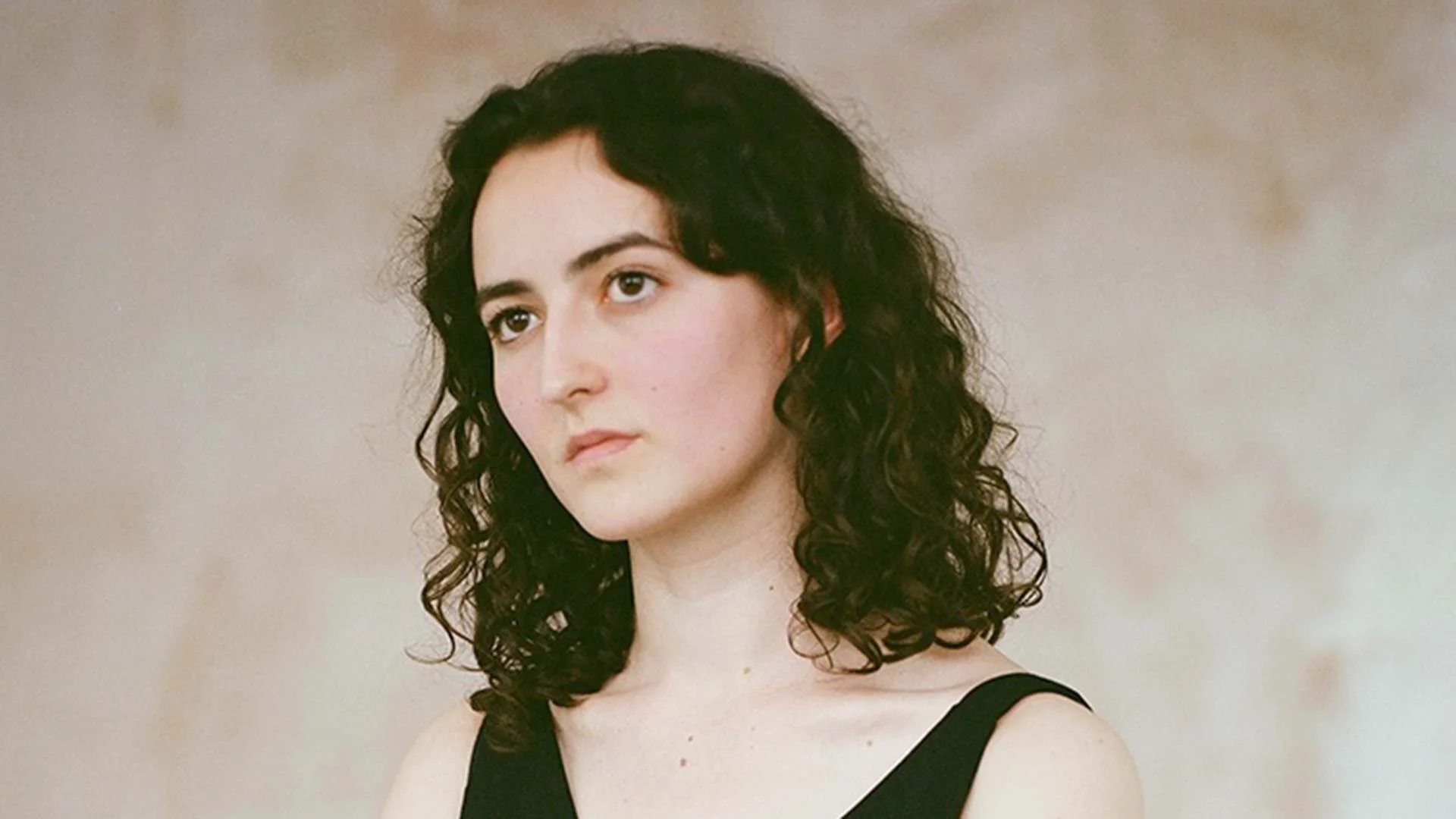
Aea Varfis-van Warmelo
In the book The Situation and the Story, Vivian Gornick talks about how the narrator in fiction can be famously unreliable, but in a non-fiction book – never. The narrator has to be reliable and trustworthy in a memoir. But your book turns this on its head as it sits somewhere in between. The only sure thing about your narrator is that she is unreliable, and yet she has control in the narrative. How do you view your narrator?
That's a lovely line from Gornick. I think of my narrator in terms of the themes that have been brought up in that question. I think of her as someone sincere, or at least, there is an effort for sincerity. I think that she has a moral clarity that maybe hasn't been totally appreciated. She does judge herself for her bad behaviour, and judges other people by moral standards. She's driven by justice, perceives injustice in the rest of the world, and when injustice is applied, it seems to be one of the most devastating things for her.
There's a line in the book about how a liar is actually someone who's really intimately familiar with truth and what's credible, because they're always orienting themselves in relation to what is real. I think that my narrator is often trying to calibrate what's moral and just. She does see herself and a lot of other people as falling short. The greatest harm [for her] in the book is when someone else who, for the most part, has been this decent, honest and moral person does something that they think is moral but is actually quite harmful, and that friction is very difficult for the narrator to process.
I think that she falls for some of her own tricks, though. There are some habits in how she perceives herself and others that are inescapable, and that self-deception is self-perpetuating, even though I think that she's quite aware of and is judgmental of other liars who get a little bit too out of themselves.
At certain points in the book, the narrator addresses the reader directly. Like ‘You should know this about me’ or ‘Until this moment…I have reported to you as accurately as I can remember it’. What did you intend or imagine to be the relationship between the reader and the book, or more specifically the reader and the narrator?
I'm actually most often thinking about their relationship with the text on the page. So, I'm thinking about rhythm and pace. I suppose it corresponds naturally to how an actor would think of an audience. I am thinking: am I keeping them engrossed? Am I giving them information at the right time? Am I modulating my voice the right way? And am I giving enough variation in pace, tone and structure to keep them listening? There's so much variety in how people will trust or interpret her confessions that I didn't think about whether or not a reader would believe the narrator. I just thought about what their time would be like in the process of reading the book, the music of the language.
There are long sentences in the book, sometimes as long as three and a half pages. While reading some of them, I noticed I was holding my breath. How did you perceive the form or the way sentences are written to contribute to the story being told?
I think punctuation corresponds with breathing. In my poetry as well, I use non-traditional punctuation – how do you make a sentence make sense and also feasible for someone to speak it? Often, commas, full stops, and colons are signals for taking a breath. In that particular sentence with this long confessional about the narrator’s childhood, I got rid of all of the punctuation and then used conjunctions as substitutes for punctuation. I did want her to be swept up in her recounting, but also for a reader to feel swept along by it.
There are several instances of very long sentences in the book, but most of them are actually lists – lies she's told, or recounting testimonies. What I like about all of these instances of long lists is that the reader is doing a lot of work pulling them all together, coming up with a common denominator and filling in the blanks. So, there was a degree of complicity that I wanted from my reader. They will assemble the list into an understanding of a story. But there are moments where I did want to remove some of that agency and limit their ability to fill in the blanks because there's not a moment for them to insert themselves.
There are essayistic bits about research done in lie detection pseudoscience, and how that research is influencing policing and the justice system in the English-speaking world. In those sections, you critique racism and sexism in the justice system. Somehow, a narrator who we know is a pathological liar is making the most sense of the lie detection tools that police systems use to gain confidence about their racial biases. How did this connection come about?
I was just interested in lie detection, and in the process of researching it I realised just how little they did. The thing that was most revealing to me is the fact that it comes from this Darwinian question: are we animal in the way that we express ourselves? I think Darwin's answer was justifiable and made sense given the information he had. He would have said, ‘Yeah, we're part animal, and we would express ourselves as they do with the same innate qualities’.
But I did find it interesting that the efforts in the last century to reassert that come from this white supremacist perspective, and they essentially limit our ability to express ourselves. It's not surprising that I found that a lot of the efforts to prove it have racist frameworks. The research in Papua New Guinea [by Dr Paul Ekman] essentially relies on the idea that the people there must be closer to animals than us in some way because they aren't white or westernised. Other methods of lie detection revolve around the idea of this “conventional” human, and that conventional human is always someone who expresses themselves in a way that is westernised, often white, and often male.
A pathological liar trying to reorder her moral life will be in pursuit of truth and try to go through these existing frameworks, like legal and policing systems. And all these structures that are designed to try and achieve truth and justice are often disappointing in that pursuit. I don't think it's a book that gives you any answers. It just tries to illuminate and indicate some of the things that are upholding this.
The book concentrates on the narrator’s relationship with three people: Normal Ben, Anna, and Desdemona. While both Anna and Desdemona are female figures of authority, the narrator’s relationship with each of them plays out differently. It’s refreshing to peek into the narrator's love life and work life, instead of just one or the other. How did these central relationships come about, and how did they allow you to explore different parts of the narrator?
I've been waiting for someone to ask me this question for a long time! The initial draft of the book didn't have anything about work. It was just focused on this romantic relationship, and the narrator's world seemed quite small because of that.
There are other forces that dictate or shape our lives beyond just love. I wanted to write about two versions of work: one that is just an economic thing that you have to do, and the other being this effort to do something because you think there is some value in your contribution to the world. So, Desdemona and Anna were two versions of work, one that is just practical and the other that offers something a bit more substantial. The fact that they're women was not intentional – I'm sure there are some interpretations about maternal roles and the fact that the narrator doesn't have a mother but has these older women figures.
The difference between public and private was something that played out throughout the book as well – the idea that there are some conversations that you will have that will matter a hundred times more than others. The narrator and Normal Ben’s form of fun is just talking to each other, and that’s why it comes down to this one horrible conversation in her bedroom, which is essentially like the courtroom of the relationship; for some reason, this one conversation matters more.
Are there writers or books in particular that inspired you while writing Attention Seeking Behaviour?
I read a lot of realist novels. What was on my mind the most as I was writing was Middlemarch by George Eliot. It's such a phenomenal work of fiction that I felt like it offered this beautiful blueprint of how to write an invented world and conversations between people.
I think that Sheila Heti has an ease in her writing. I find her memoir and autofictional writing really compelling. It has a confidence that's totally inverse of the confidence that I try to bring to my writing. I find that inspiring because I don't think I'm an easy-going writer. I think I'm quite strict. [Vladimir] Nabokov has also been a huge influence on how I think of the sentence and play; intense writing can be funny and a bit silly because I think Nabokov is very playful.
I have been strongly influenced by good journalism. I like Rachel Aviv and John Jeremiah Sullivan a lot. They are people who've made me think about how to write an essay.
Attention Seeking Behaviour is out now with Peninsula Press.