Holly Keogh - Bang Bang Bang On The Door Baby!
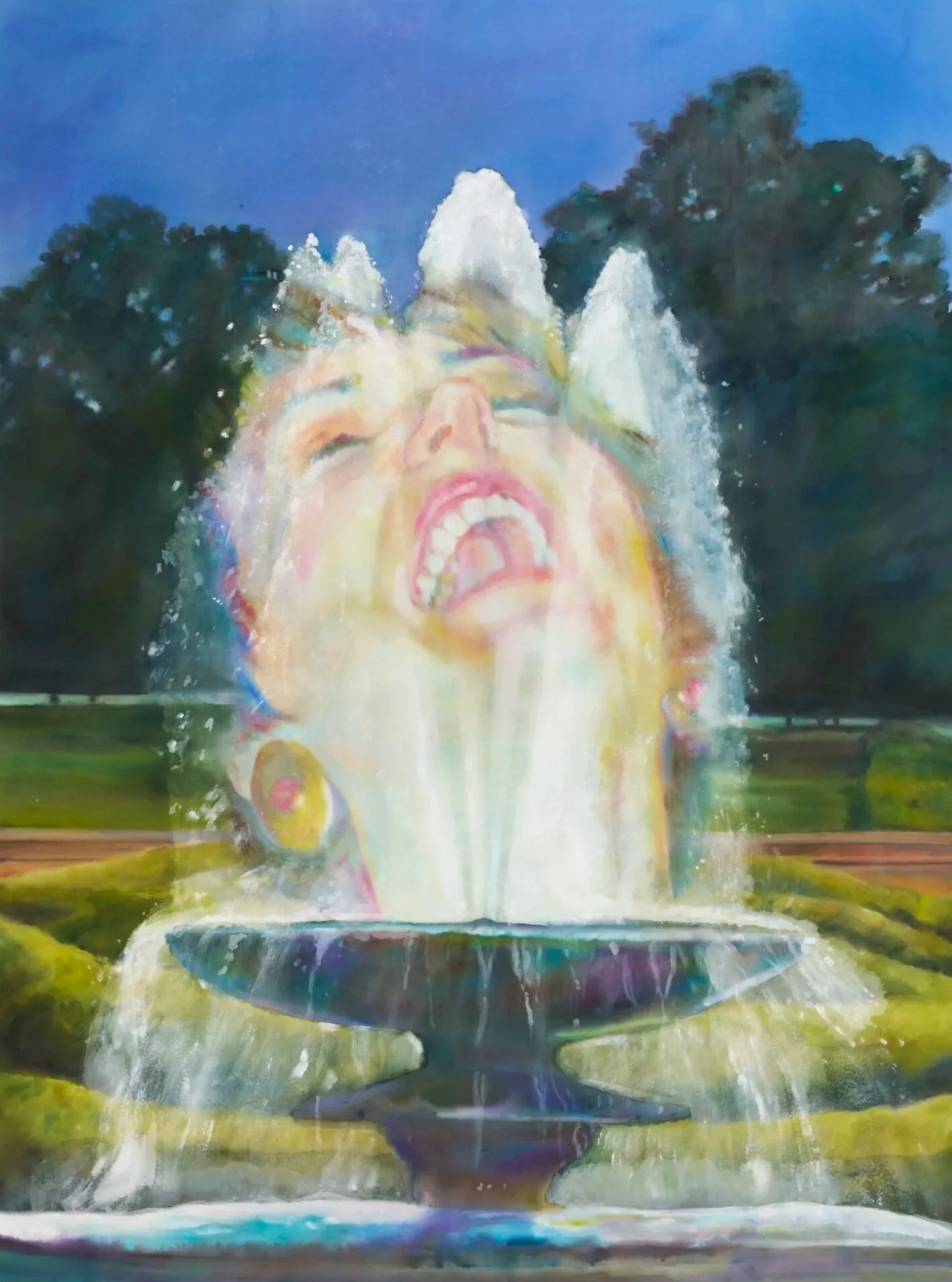
Laughing And Crying, Acrylic on Canvas, 2026. Image via Soup Gallery
Filmed inside the home of the artists Phillip Maberry and Scott Walker, the music video for The B52’s Love Shack is everything you would want a campy and eccentric New Wave party to be. Bang on the door of Mayberry and Walker’s Shaque D’amour and you'll find cartoonish crayon-striped walls that collide with zebra print ceilings, a dance floor of shiny silver pumps and freshly painted toenails that move across patterns of lemon and lime diamonds. Frat boy vests, uncouth mosaic ties and 9-to-5 suits move to the same rhythm of tiny fringe-flowing dresses, dangling earrings, teased out beehives and fuchsia punk-hairdos. Fred Schneider commands the party from his microphone, with his only real direction summed up as ‘huggin' and a-kissin', dancin' and a-lovin’’.
As I can only dream of joining The B52’s ‘headin' down the Atlanta highway’ in their convertible Chrysler, I instead took the bus down the Old Kent Road to Soup Gallery, where Holly Keogh’s debut UK solo exhibition pays homage to the band through its title Bang Bang Bang On The Door Baby! On arrival, I was greeted by similarly saturated hues to those in Love Shack, colours I can only seem to be able to find recorded on film, that are a lens which I see 70s and 80s media through. These colours, of course, are still all around us, but the combinations of them on patterned wallpaper and soft furnishings have fallen out of fashion, been stripped away in favour of creamy white paint and faded by decades of sun exposure.
The full-bodied colours of each painting work with and against one another, as loud blues argue with dominant reds, or the mustard of a belted pair of trousers shares the same arrogance as a crimson toilet seat. ‘We are the colours you should aspire to,’ they tell us.
In Love Shack, these colours celebrate a queer counterculture where weirdos are encouraged to be flamboyant and free – glamour is defined through faux pearls and fishnets because the norms are to be ignored: everyone is here to be a part of a community, to have a bloody good time. In Bang Bang Bang On The Door Baby! the colours are representative of a particular type of conservative British wealth – one that turns its nose up at costume jewellery and whose idea of activism is making a noise complaint. The idea of glamour here is different: it encourages an individualistic decadence, one that flaunts down to other people rather than with them.
Falling and Laughing, a painting of a woman throwing her head back in ecstasy overlaid on a gushing stately fountain, best captures this idea of luxury. Like many of the body parts found in the other paintings, her face feels less like a portrait of a real person and more like an imagined one designed for an advertisement. Eyes closed and smiling mouth agape, her expression feels performed, as though she is experiencing a pleasure that we are told only a product can make us feel. As the fountain cascades over her, I can’t help but think of the popping of a champagne bottle that brings with it a clumsy, old-fashioned innuendo – what could this genteel woman be discovering such bliss from?
Amongst this group of paintings, the parts of a woman that are used to both seduce and sell is a common theme. Printed on top of an upholstered headboard in Sink In are five plumped lips, each fading away like kisses on a cheek. In Nothing Is Out Of Place, a faceless woman wearing dainty lingerie fades into the open wooden doors of a balcony, as if to suggest the endless garden outside is the thing to be coveted. There are no “real” people who live inside these grand interiors in these paintings, just nods to the type of person who could live here. Glimpses of a fabricated desire.
This wealth is sinister, and each painting is a wink-wink-nudge-nudge; they know that we know they know this is all absurd. Nothing Personal I-IV, a series of smaller canvases, highlight these details through minute glances that these houses only seem to spring to life for visitors. Two fish share a platter – one stares up at the other with white, bulbous eyes, as they wait for the dinner party to begin. A coupe glass filled halfway with a peachy liquid is awkwardly topped up by a bandaged-up hand and offered our way. There is nowhere to hide from such dreaded hospitality.
Light falls so heavily on the windscreen of a car that its interior is obscured from view – we can only imagine if a driver waits for us inside. It is a far cry from the Chrysler that picks up passengers on the way to the Love Shack.
Bang Bang Bang On The Door Baby! is on view at Soup Gallery until 16 May 2026.